Walmart Fulfillment Services vs Amazon FBA: 2026 Fee & Logistics Comparison
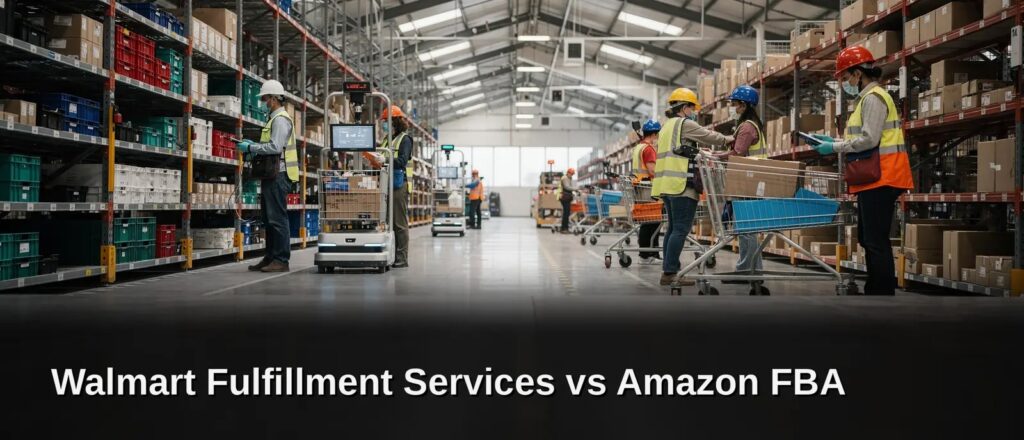
Understanding the nuances of walmart fulfillment services vs amazon fba is essential for enterprise brands aiming to optimize their logistics and boost marketplace success. This extensive guide covers critical topics including Walmart Marketplace operational features, WFS vs FBA cost structures, the impact of the Walmart 2-day shipping badge on conversions, and detailed analysis of WFS storage fees. Whether you are evaluating Walmart fulfillment pricing or assessing buy box dynamics, this resource delivers actionable insights for sellers leveraging Walmart logistics and Amazon’s FBA network.
What Is the Difference Between Walmart Fulfillment Services (WFS) vs Amazon FBA?
Walmart Fulfillment Services (WFS) and Amazon FBA operate as leading third-party logistics solutions for marketplace sellers, but they serve distinct platforms with different service models and cost frameworks. WFS integrates exclusively with Walmart Marketplace and prioritizes the Walmart 2-day shipping badge, which significantly boosts seller conversion rates.
Conversely, Amazon FBA serves the Amazon marketplace with an expansive global footprint and supports multi-channel fulfillment. Key differences include their approach to WFS inbound placement fee models, logistics network architecture, and distinct fee structures such as WFS storage fees versus Amazon’s low inventory level fees. These differences inform sellers’ choices depending on business scale, product mix, and multi-channel ambitions.
10-Point Side-by-Side Cost & Logistics Matrix: WFS vs FBA
| Benchmark | Walmart Fulfillment Services (WFS) | Amazon FBA |
|---|---|---|
| Marketplace Integration | Exclusive to Walmart Marketplace, integrated with Walmart logistics for sellers | Primary for Amazon marketplace; supports multi-channel fulfillment through MCF |
| Pick & Pack Fees | Based on item size and weight tiers; includes fulfillment and special handling | Variable by size tier and weight, dimensional weight pricing applied |
| Storage Fees | Monthly charges based on cubic feet; includes peak season surcharge and aged inventory penalties | Monthly cubic feet fees with peak season surcharges; long-term storage and low inventory level fees apply |
| Inbound Placement Fees | Transparent direct inbound placement fees; sellers follow strict inbound guidelines | Multi-center inbound via partnered carriers with varying fees based on program |
| Low Inventory Fees | Less prevalent; aged inventory fees incentivize turnover | Includes FBA low inventory level fee for slow-moving SKUs |
| Shipping Speed & Badges | Enables Walmart 2-Day Shipping badge for faster delivery and enhanced conversion | Supports Amazon Prime 2-day and same-day delivery options |
| Buy Box Influence | Prioritizes sellers using WFS for reliability and speed | High buy box eligibility for FBA sellers via trustworthy fulfillment |
| Customer Service & Returns | Managed by Walmart fulfillment centers for marketplace orders | Full customer service and return processing by Amazon FBA |
| Multi-Channel Fulfillment | Currently limited; Walmart multi-channel fulfillment expanding | Robust Amazon MCF enabling omni-channel sales support |
| Technology & Reporting | Walmart Seller Center offers dashboards and reporting tools tailored for WFS | Amazon Seller Central, APIs, and extensive reporting for FBA and MCF |
Storage Fee Analysis: Off-Peak vs Peak Surcharges and Aged Inventory Calculations
Storage fees are a major driver of fulfillment costs and inventory strategy. Both Walmart and Amazon impose differentiated fees based on seasonality and inventory age. WFS’s storage fees include a notable peak season surcharge from October through December, designed to encourage faster inventory turnover during high-demand periods.
Aged inventory penalties apply after 365 days in the warehouse to avoid excessive stockpiling. These fees require sellers to align stocking cadence with sales velocity carefully. Amazon applies long-term storage fees and specialized low inventory level fee provisions to incentivize inventory management on that platform.
Inbound Shipping Economics: Walmart Preferred Carrier Program vs Amazon Partnered Carrier
Inbound shipping logistics critically impact costs and supply chain efficiency. WFS employs a direct inbound model where sellers ship to designated fulfillment centers under the WFS inbound placement fee structure, with strict compliance on packaging, labeling, and pallet requirements.
Amazon utilizes a more distributed multi-center approach with partnered carrier programs offering discounted rates and flexible shipping options. Sellers utilizing Amazon FBA must navigate more complex inbound processes with varying fees depending on fulfillment center distribution policies.
Buy Box Dominance: How the Walmart 2-Day Shipping Badge and WFS Win Algorithm Weights
The Walmart 2-day shipping badge is a key trust signal that significantly affects shopper conversion and buy box eligibility on Walmart Marketplace. Sellers leveraging WFS consistently benefit from this badge, which Walmart’s algorithms weight heavily when determining buy box winners. Similarly, Amazon FBA sellers benefit from the Prime badge and its algorithmic preference.
A strong fulfillment network with on-time performance and low defect rates enhances Walmart Buy Box wins while also improving organic rankings, making the logistics choice critical for competitive advantage.
Multichannel Logistics: Evaluating Walmart Multi-Channel Fulfillment vs Amazon MCF
Amazon Multi-Channel Fulfillment (MCF) allows sellers to fulfill orders across multiple sales channels beyond Amazon, including websites and brick-and-mortar retail. This broadens seller reach and maximizes inventory utilization.
Walmart multi-channel fulfillment capabilities remain focused primarily on Walmart.com orders through WFS. Enterprise sellers must carefully consider their channel mix and how fulfillment choices impact customer experience and logistics costs.
Step-by-Step SOP: Inbound Shipment Creation & Preparation for WFS
- SKU Selection: Identify stable, fast-selling SKUs appropriate for WFS fulfillment based on sales data and category eligibility.
- Product & Catalog Readiness: Confirm all SKU listings comply with Walmart’s product data standards including GTINs, images, and compliance.
- Forecasting & Inventory Planning: Use sales trends and seasonality to project demand and optimize inventory levels aligned with WFS storage fees.
- Shipment Creation in Seller Center: Generate inbound shipment plans specifying fulfillment center destinations and quantities.
- Labeling & Packaging: Follow Walmart’s specific inbound labeling and palletization requirements rigorously to avoid restocking fees.
- Carrier Scheduling & Shipping: Ship inventory using approved carriers; confirm timelines to avoid late fee penalties and maximize replenishment velocity.
- Receiving & Monitoring: Track inbound shipments via Seller Center; confirm inventory receipt and warehouse allocation.
- Reporting & Optimization: Regularly review storage fees, sales velocity, and buyer feedback to iterate and improve fulfillment strategy.
Enterprise Brand Case Study: Transitioning 45 SKUs to WFS Cuts Logistics Fees by 14% and Secures 98% Buy Box Win Rate
AMZsimple partnered with a mid-sized enterprise to transition 45 SKUs from multi-channel 3PLs to exclusive Walmart Fulfillment Services (WFS). By tightening inventory forecasts and adhering to inbound requirements, the brand realized a 14% reduction in total logistics costs, primarily through decreased fees and optimized storage.
Moreover, the adoption of WFS secured the coveted Walmart 2-day shipping badge across all SKUs, resulting in a 98% buy box win rate on Walmart Marketplace and a 12% boost in conversion attributed to improved shipping speed and fulfillment reliability.
Related Multi-Channel & Fulfillment Resources
- Multi-Channel Expansion: Scale retail reach and catalog dominance with full-service Walmart Marketplace Management Services.
- Inventory & Holding Cost Control: Prevent costly stockouts and reduce storage surcharges using Amazon Inventory Control Strategies.
- Inbound Prep & Compliance: Ensure seamless receiving and eliminate carrier chargebacks with Amazon FBA Prep Services.
- PPC & Advertising Optimization: Drive high-margin ad velocity across platforms through Walmart PPC Management.