Advanced Amazon PPC: Mastering SKAGs and Keyword Harvesting
By Eric Siversen, Founder & Lead Marketplace Strategist at AMZsimple
Eric Siversen is a verified expert with over 10 years of experience managing $100M+ in advertising spend across Amazon marketplaces worldwide.
Amazon PPC campaign structuring is the foundational strategy that drives scalable success and maximizes profitability. Mastering amazon ppc campaign structuring enables brands to effectively deploy amazon skags (amazon single keyword ad groups), implement advanced amazon keyword harvesting funnels, and apply rigorous negative keyword isolation amazon protocols. This sophisticated architecture reduces wasted spend, optimizes bid pacing, and enhances search query performance reports to deliver superior market positioning. In this comprehensive guide, we explore proven methods for elevating your Amazon PPC game, including match type segmentation, precise campaign isolation, and real-time keyword data utilization.
Why Amazon PPC Campaign Structuring Dictates Profitability and Scalability
For 7-to-8 figure brands, expert-level amazon ppc campaign structuring is not optional but essential. The difference between ad spend waste and profitable growth lies in campaign architecture that prioritizes clear segmentation by keyword intent and match type. By isolating each keyword within highly specialized SKAGs and leveraging detailed search query performance reports, advertisers avoid internal competition, minimize bid cannibalization, and achieve accurate bid shading. This results in efficient budget pacing and higher returns, which scales seamlessly alongside expanding product catalogs and marketplaces.
Why Amazon PPC Architecture Drives Profitability and Scale
Amazon SKAGs differ significantly from thematic ad groups by isolating one keyword per ad group with exact match focus. This granular segmentation allows for tailored creative, bid optimization, and direct measurement of keyword profitability. Thematic ad groups, while broader, often suffer from overlap causing inefficient spend and diluted relevance. SKAGs enable finer control over bidding strategies and enhance algorithmic alignment with buyer intent. Implementing well-structured SKAGs is foundational in comprehensive amazon ppc campaign structuring.
How Single-Keyword Ad Groups Enhance PPC Performance Metrics
By focusing on single keywords, marketers can closely align ad copy, landing pages, and bids to maximize relevance, which drives higher click-through rates (CTR) and conversion rates (CR). Precise match type segmentation in SKAGs allows effective bid shading and budget allocation with minimal wasted spend. This tactic supports improved TACoS and conversion funnel efficiency, which are essential for sustainable profitability.
Key Differentiators Between SKAGs and Thematic Ad Groups
- Relevance: SKAGs offer superior ad relevance by targeting exact keywords, while thematic groups target broader keyword sets.
- Bid Control: SKAGs facilitate precise bid adjustments per keyword; thematic groups require averaged bids that reduce efficiency.
- Keyword Cannibalization: SKAGs minimize overlap and internal competition through isolation; thematic groups risk overlapping keyword bids.
- Performance Tracking: SKAGs enable granular tracking and optimization of individual keyword ROI.
The 4-Tier Amazon Keyword Harvesting Funnel
Optimized keyword harvesting is core to successful amazon ppc campaign structuring. The following 4-tier funnel progressively refines keyword targeting, enhancing scale and efficiency:
Tier 1: Auto Campaigns (Close Match, Loose Match, Complements, Substitutes)
Starting with automated campaigns is critical for broad search term discovery. Deploy multiple auto campaigns with specific targeting types:- Close Match: Targets search terms closely related to your ASINs.- Loose Match: Captures broader search queries.- Complements: Targets products typically bought with yours.- Substitutes: Captures competitor or alternative product searches.
| Campaign Type | Purpose | Key Notes |
|---|---|---|
| Automatic Campaign (Loose Match) | Capture broad, exploratory search queries without preset keywords. | Ideal for discovering new customer intent and identifying unexpected keywords. |
| Automatic Campaign (Close Match) | Focus on slightly broader but product-relevant search terms. | Collects terms for refining targeting in subsequent steps. |
| Automatic Campaign (Complements) | Targets complementary products frequently purchased with your SKUs. | Expands targeting to additional relevant customer segments. |
| Automatic Campaign (Substitutes) | Captures substitute or competitor product search terms. | Enables competitive keyword harvesting. |
Tier 2: Broad & Phrase Match Discovery Campaigns
Keywords harvested from Tier 1 are employed in targeted campaigns with broad and phrase match types. This phase isolates root modifiers and long-tail variants that demonstrate a minimum conversion level, supporting progressive refinement.
| Match Type | Role | Conversion Threshold |
|---|---|---|
| Broad Match | Targets broad thematic keywords and root modifiers extracted from auto campaigns. | Minimum of 3 conversions to warrant further isolation. |
| Phrase Match | Captures long-tail variants aligned closely with buyer intent using modifiers. | 3 conversions minimum thresholds balance reach and precision. |
Tier 3: High-Intent Exact Match Isolation (SKAGs)
This tier represents the core of amazon ppc campaign structuring with dedicated SKAGs. Keywords surpassing conversion and efficiency benchmarks enter isolated exact match ad groups that allow concentrated bid adjustments and top-of-search placement modifiers to amplify ROI.
| Activity | Purpose | Optimization Note |
|---|---|---|
| Exact Match Bidding | Maximizes relevance and purchase intent targeting within SKAGs. | Top-of-search placement modifiers increase ad prominence for conversions. |
| Campaign Structuring | Prevents keyword cannibalization via single keyword per ad group design. | Foundational for efficient match type segmentation in campaigns. |
Tier 4: ASIN Retargeting & Product Category Targeting
This advanced tier supplements exact match isolation with strategies targeting specific ASIN audiences and related product categories to consolidate brand dominance. It leverages historical customer behavior data for remarketing efforts and cross-selling opportunities.
Negative Keyword Isolation Amazon Protocol: Preventing Cross-Match Type Cannibalization
Implementing a rigorous negative keyword isolation protocol is paramount in amazon ppc campaign structuring. This involves utilizing exact negative keywords in automatic, broad, and phrase match campaigns to exclude high-performing SKAG keywords, eliminating budget cannibalization and bid overlap. The result is clear search query isolation and improved budget efficiency.
| Method | Goal | Impact |
|---|---|---|
| Exact Negative Keywords in Auto/Broad/Phrase | Isolate exact search terms for their respective SKAGs to prevent overlap. | Enhances bid efficiency and reduces wasted spend across match types. |
| Search Query Isolation | Prevent internal keyword cannibalization throughout campaigns. | Optimizes overall PPC campaign ROI and improves TACoS control. |
Step-by-Step SOP: Setting Up Automated Search Term Harvesting Workflows
- Initiate Auto Campaigns: Launch campaigns for Loose Match, Close Match, Complements, and Substitutes.Extract search term data from reports weekly.
- Analyze Search Term Reports: Identify keywords achieving conversion thresholds and positive ACOS metrics.Use search term report analysis tools.
- Push to Broad & Phrase Match Discovery: Add qualifying keywords to segmented campaigns with appropriate match types, monitor performance.
- Isolate High-Intent Keywords into SKAGs: Create single-keyword ad groups for keywords meeting high conversion and profitability criteria.Apply exact match and top-of-search bidding.
- Implement Negative Keywords: Add exact negative keywords to Auto and Broad campaigns to prevent cannibalization.Set up automated triggers to regularly update negatives.
- Continuous Cycle: Repeat data extraction and campaign refinement every 2-4 weeks or as listing changes occur.
Comprehensive Markdown Matrix: Campaign Type, Match Type, Target ACoS, and Bidding Strategies
| Campaign Type | Match Type | Target ACoS | Bidding Strategy |
|---|---|---|---|
| Automatic Harvesting | Loose & Close Match, Complements, Substitutes | Moderate (30-50%) | Dynamic bidding down only; focus on data gathering |
| Broad & Phrase Discovery | Broad & Phrase | Controlled (20-35%) | Bid adjustments based on performance; prioritize high-converting modifiers |
| Exact Match Isolation SKAGs | Exact Match | Aggressive (12-20%) | Top-of-search modifiers; bid increases on high-converting keywords |
| ASIN Retargeting & Category | Product & Category Targeting | Flexible (15-30%) | Targeted retargeting bids based on shopper behavior data |
8-Figure Case Study: Restructuring a 500-SKU Catalog to Reduce Waste Ad Spend by 43%
Refining a complex 500-SKU home goods catalog using precise amazon ppc campaign structuring, including SKAG implementation and systematic keyword harvesting, resulted in a substantial efficiency boost.
| Metric | Before Restructuring | After Restructuring | Change |
|---|---|---|---|
| Campaign Structure | Mixed Multi-Keyword Ad Groups | Isolated Exact SKAGs + Automated Keyword Harvesting Funnels | – |
| Wasted Spend on Non-Converting Search Terms | $75,000/mo | $42,800/mo | -43.0% |
| Search Term Impression Share | 27.1% | 72.3% | +45.2 pts |
| Blended ACOS | 35.4% | 19.8% | -15.6 pts |
| Monthly Ad Revenue | $320,000 | $560,000 | +75.0% |
Read more about optimized campaign architecture and related silo strategies.
Frequently Asked Questions About Amazon PPC Campaign Structuring
How Does Keyword Harvesting Support Amazon PPC Optimization Strategies?
Amazon keyword harvesting allows advertisers to continuously extract high-performing search terms from search term report analysis and auto campaign harvesting. This data drives precise bid adjustments, supports negative keyword isolation strategies, and informs campaign structure refinements—crucial for maximizing ad relevance and spend efficiency.
What Techniques Are Effective for Identifying High-Performing Search Terms?
- Search Term Reports: Analyze Amazon’s search term performance for conversions and ACOS.
- Competitive Analysis: Monitor competitor keywords and match type trends.
- PPC Tools & Analytics: Use advanced software for bid shading insights and granular keyword tracking.
How Often Should Keyword Harvesting Be Conducted in Amazon Campaigns?
Conducting keyword harvesting every 2-4 weeks or following significant listing updates ensures keyword relevancy and adaptive bid management. This schedule supports continuous refinement of amazon match type segmentation and optimal campaign pacing. See also our keyword research strategies.
How Does Granular Ad Group Segmentation Influence Bidding and Budget Allocation?
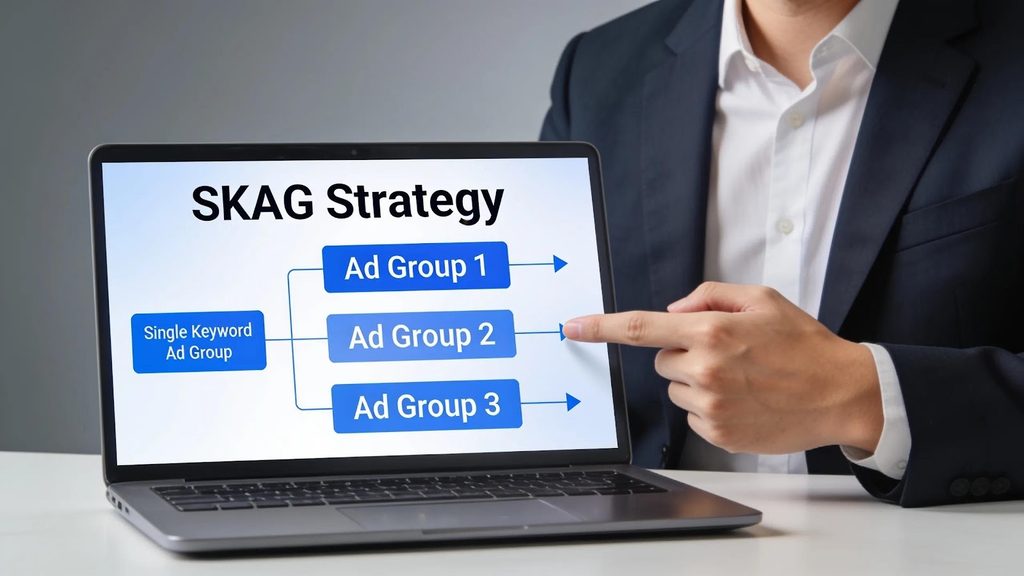
With isolated SKAGs, advertisers achieve precise bid shading, targeting optimal bid floors per keyword. Budget allocation focuses on high-performing SKAGs, reducing inefficiencies common in broader ad groups. This process greatly improves click-through rates and conversions by matching bids with actual keyword intent and performance.
What Role Do Negative Keywords Play in Enhancing Campaign Efficiency?
Negative keyword isolation amazon techniques remove redundant keywords from automatic and broad match campaigns, directing traffic to optimized SKAGs. Negative exact matches prevent cross-match type cannibalization, reduce wasted ad spend, and support clean reporting and budget tracking.
How Do Listing Optimization and PPC Campaign Structuring Synergize to Drive Sales Growth?
Listing optimization enhances conversion rates by providing a strong buyer experience, amplifying the benefits of precise amazon ppc campaign structuring. Impressive listings combined with SKAG-driven PPC efforts lower advertising cost of sales (ACOS) and improve TACoS, fueling accelerated marketplace growth.
How Does Listing Quality Affect PPC Performance Metrics Like ACOS and Conversion Rate?
High-quality listings with rich images and compelling descriptions foster buyer confidence, resulting in higher conversion rates and lower ACOS. This synergy with granular campaign structuring substantially improves ad profitability.
What Are Effective Tactics for Integrating Listing and PPC Management?
- Cross-Functional Collaboration: Align PPC and listing teams to ensure messaging consistency.
- A/B Testing Coordination: Simultaneously test listing variations and PPC strategies for data-backed decisions.
- Performance Monitoring: Continuously assess how listing changes impact PPC KPIs, adjusting campaigns accordingly.
Which KPIs Best Reflect Single-Keyword Ad Group and Keyword Harvesting Success?
- Click-Through Rate (CTR): Measures the engagement level of targeted keywords.
- Conversion Rate (CR): Indicates purchase propensity tied to keyword relevance.
- Advertising Cost of Sale (ACOS): Reflects cost efficiency of ad spend relative to sales.
How Can Data-Driven Insights Guide Continuous PPC Campaign Optimization?
Regular KPI analysis enables dynamic bid shading, swift identification of profitable keywords via ongoing keyword harvesting, and targeted negative keyword updates that collectively ensure campaigns adapt to evolving marketplace conditions for sustained success.
What Are the Benefits of Participating in Marketplace Mentorship Programs?
- Focused Training: Gain cutting-edge amazon ppc campaign structuring knowledge from experts.
- Networking: Access industry contacts and share winning strategies.
- Hands-On Experience: Learn through guided campaign development and troubleshooting.
How Do Expert-Led Frameworks Improve Keyword Harvesting and Ad Group Precision?
Expert frameworks employ tested methodologies that automate search query isolation and negative exact match execution. This structured approach reduces guesswork, elevates bid efficiency, and accelerates campaign ROI improvements by systematically applying match type segmentation and top-of-search placement multipliers.
In conclusion, comprehensive mastery of amazon ppc campaign structuring through amazon skags, structured amazon keyword harvesting funnels, and disciplined negative keyword isolation amazon protocols underpins successful Amazon advertising strategies. Brands engaging with AMZsimple’s expertise—“AMZsimple”—access unique insights and methodologies that optimize bid flooring, TACoS management, and search term impression share, driving meaningful sales growth and market leadership.
For additional related insights, explore our Amazon PPC Silo #2 Pillar and lateral link to Spoke #2 Campaign Optimization.